

What to Look for When Choosing a HubSpot Web Design Agency
Quick answer: Most HubSpot partners build websites as a supporting service — not a core discipline. To find one where HubSpot website design is a real competency, evaluate three things: platform depth (custom modules, CRM integration, serverless functions), revenue thinking (do they ask about your sales process before showing mockups?), and post-launch capability (will they still be building six months after launch?). If your site needs to generate pipeline, hire a platform agency. If you just need a brochure site, you probably don't need HubSpot at all.
Why HubSpot Website Design Expertise Varies So Much Across Agencies
Search "HubSpot website design" and you'll find hundreds of agencies in the partner directory. Browse their portfolios and you'll notice something: a lot of these sites look similar. Similar template structures, similar stock modules, similar visual patterns. That's not because the agencies are bad at design—it's because most of them aren't primarily web development shops.
The HubSpot partner ecosystem skews toward marketing automation, CRM consulting, and inbound strategy. Many of these agencies build websites because clients need them, but web development isn't their deepest discipline. The site gets scoped as a project inside a larger retainer, built by the same team that manages email workflows, and launched as a deliverable rather than a product.
We've reviewed enough of these builds to see a common pattern: Content Hub used as a flat CMS, minimal CRM integration beyond form submissions, no custom modules, no smart content, no behavioral triggers, no lifecycle stage logic touching the front end. The site works. It just doesn't use what makes HubSpot different from a standard CMS. In many cases, the same result could've been built on WordPress for less.
Two-thirds of B2B buyers now prefer a completely rep-free buying experience. Your website is carrying the weight of that preference—qualifying, educating, and routing buyers who may never want to talk to a rep at all. If the agency building it treats web development as a side service, the site will perform like one.
The question worth asking isn't "which HubSpot partner should I hire?" It's: does this agency treat web design as a core capability, or a supporting service?
What to Consider When Choosing a HubSpot Web Design Agency
Partner badges won't answer that question. Portfolios alone won't either—a polished case study page can obscure a lot of template work. Here's what actually separates agencies that build on HubSpot from agencies that build with HubSpot.
Pillar 1: Platform Depth, Not Partner Status
The first filter is technical. Can the agency actually use the platform's differentiators, or are they just building pages in a drag-and-drop editor?
Here's what platform depth looks like in practice:
- Custom module development. Not tweaked stock modules—custom-built components designed for the business's specific content model and conversion paths. If every module in the build ships with HubSpot's default marketplace, the agency isn't developing.
- CRM integration at the page level. Smart content that adapts based on lifecycle stage, segment membership, or contact properties. Personalized CTAs. Progressive form logic. These are the capabilities that justify choosing HubSpot over a cheaper CMS — and most agencies never implement them.
- Custom objects. When we built a client's contact management system in HubSpot, it required custom object implementation—structuring data relationships that don't fit HubSpot's default schema. Most partner agencies have never touched custom objects. Ask about them and you'll learn a lot about where the technical ceiling is.
- Serverless functions and APIs. HubSpot's serverless functions let you run backend logic without maintaining a separate server. API integrations let you pull data from external systems into the site experience. If the agency can't speak to these, they're building in the visual editor and stopping there.
- Content Hub vs. legacy CMS Hub knowledge. HubSpot rebranded CMS Hub to Content Hub and expanded its capabilities. An agency still referring to "CMS Hub" in proposals or conflating Content Hub tiers isn't keeping current with the platform.
HubSpot certifications can be completed in a few days. Platform depth takes years of implementation work across different business models, CRM configurations, and integration challenges. The certification tells you someone passed a test. The implementation history tells you whether they can build what you need.
Pillar 2: Revenue Thinking, Not Project Thinking
This is where most evaluations go sideways. You're comparing proposals, and one agency leads with mood boards and homepage concepts while another leads with questions about your CRM setup, sales process, and reporting requirements.
Hire the second one.
A website-builder agency starts with aesthetics: What should this look like? What's the brand direction? Let's pick fonts and colors.
A platform agency starts with revenue infrastructure: How does your sales team receive leads today? What lifecycle stages are you tracking? Where does attribution break? What does your CRM data actually look like — clean, messy, nonexistent?
The design conversation matters. But when it comes first, before anyone has mapped the buyer journey to the CRM, you end up with a beautiful site that doesn't connect to anything. This happens repeatedly: a CMO signs off on gorgeous mockups, the site launches, and three months later the sales team is still manually exporting form submissions because nobody scoped the lead routing.

When we re-architected VenturEd Solutions' Salesforce-to-HubSpot integration—which was previously non-functional—that wasn't a website project. It was a revenue infrastructure project that happened to include the website. The CRM integration work had to come first, because without it, the site was just a brochure sitting on top of a broken data layer.
Revenue thinking means the agency asks uncomfortable questions early:
- What happens to a lead after they convert on the site?
- Which lifecycle stages trigger which internal actions?
- Are you using HubSpot for sales, or just marketing?
- What does your reporting dashboard need to show, and can your current setup deliver it?
If the first conversation is about aesthetics and the CRM comes up in week four, you're hiring a design shop.
Pillar 3: Post-Launch Capability
The build is the beginning. This is the pillar most buyers forget to evaluate—and the one that burns them hardest.
Most agency engagements follow the same arc: discovery, design, development, launch, a 30-day QA window, and then silence. The agency moves on to the next build. Your marketing team inherits a site they can update but can't evolve.
Post-launch capability means:
- Ongoing Content Hub optimization. New page templates, landing page builds, and module updates as campaigns evolve. Not a separate SOW every time you need a new section type.
- Iterative conversion testing. Form strategy, CTA placement, smart content refinement based on actual behavioral data from HubSpot — not guesswork.
- SEO and AEO integration. A 2026 controlled study found AI Overviews cut organic clicks by 38% on queries where they appear, with zero-click searches jumping from 54% to 72%. When someone does reach your site through search, every page has to work harder. Post-launch SEO/AEO isn't an add-on—it's how the site earns its investment back.
- CRM refinement. Properties drift. Lifecycle stages need adjustment as the sales process evolves. Lead scoring models need tuning. The agency that built the integration should be the one maintaining it.
Ask this during evaluation: What does our engagement look like six months after launch? If the answer is vague — "we offer retainers" or "we can discuss support packages" — the agency doesn't have a post-launch practice. If the answer is specific — ongoing sprint-based development, quarterly CRM audits, page performance reviews tied to pipeline metrics — that's a different conversation.
The Partner Tier Question (And Why It's the Wrong One)
HubSpot's partner tiers — Gold, Platinum, Diamond, Elite — measure one thing: revenue generated for HubSpot. A Diamond partner has sold more HubSpot subscriptions and managed more HubSpot revenue than a Gold partner. That's it.
Partner tier doesn't measure:
- Design quality
- Development depth
- Client satisfaction
- Website performance
- CRM integration sophistication
Tier isn't meaningless. Higher-tier partners have more reps at bat — they've done more implementations, which usually means more pattern recognition and broader platform exposure. That counts for something. Butwe've seen Diamond partners produce sites that are visually indistinguishable from a free HubSpot theme, and we've seen smaller partners deliver genuinely custom work that uses the platform's full capability set.
Tier is a volume signal, not a quality signal. If you're using it as your primary filter, you're optimizing for the wrong variable.
Here's what to filter on instead:
- Portfolio specificity. Not "we built 200 HubSpot sites" but "here's a site where we built custom modules for [specific business need], integrated lifecycle stage logic into the page experience, and connected form submissions to a multi-step lead routing workflow." Volume is easy to claim. Specificity is hard to fake.
- Technical references. Can you talk to a client's developer or marketing ops lead — not just the CMO who signed the contract — about what the engagement was actually like?
- Architecture conversations. In the sales process, is the agency talking about information architecture, content modeling, and CRM data structure? Or are they jumping straight to visual design and timeline?
We're a HubSpot Solutions Partner. I'm telling you that partner status alone is a weak signal. Evaluate the work.
What a Real HubSpot Website Engagement Looks Like
If you haven't been through a platform-depth HubSpot build before, here's what the phases typically look like — and what to watch for at each stage.
-
Discovery and strategy (2-4 Weeks). The agency audits your current site, CRM configuration, content model, and analytics. They map the buyer journey against your sales process and identify where the current experience breaks. This phase should produce a documented strategy — not just a brief. If discovery is a single kickoff call, scope is being skipped.
-
Content strategy and information architecture (2-3 Weeks). Page hierarchy, URL structure, content types, and module requirements get defined. This is where a platform agency separates from a website-builder agency: they're designing the content model for HubSpot's specific module system, not just wireframing pages.
-
Design (3-6 Weeks). Custom design — not template selection. Homepage, key interior templates, and conversion-critical pages designed with CRM context in mind. Smart content variations should be part of the design phase, not bolted on later.
-
Development (4-8 Weeks). Custom module builds, HubDB configuration if applicable, CRM integration, form logic, lead routing, and serverless function development. The development phase for a real HubSpot build is longer than a WordPress build of comparable page count, because the CRM layer adds complexity.
-
CRM Setup and QA (2-3 Weeks). Lead routing tested end-to-end. Lifecycle stage transitions validated. Attribution model verified. Form submissions confirmed in the CRM with correct property mapping. This phase gets compressed or skipped by agencies that treat the site as a standalone deliverable.
-
Launch and Transition (1 Week). DNS migration, redirect mapping, analytics verification, and team training on Content Hub's editing interface.
-
Post-Launch (On-Going). Iterative development sprints, content builds, conversion optimization, CRM refinement, and performance reporting tied to pipeline—not just traffic.
Total timeline for a mid-market B2B site: 14-26 weeks from kickoff to launch, depending on content volume, CRM complexity, and approval cycles. Agencies quoting 6-8 weeks for a custom HubSpot build are either cutting scope or cutting corners.

Realistic investment range: $9,000 to $75,000 for the build itself, with smaller sites and single-template landing pages on the lower end and complex multi-template sites with deep CRM integration on the upper end. Below $9K and you're getting template work. Above $75K and you should be getting a dedicated strategist, custom reporting tied to revenue, and multi-channel integration.
Website-Builder Agency vs. Platform Agency
Here's the comparison distilled. Use this as an evaluation rubric when you're reviewing proposals.
| Component | Website-Builder Agency | Platform Agency |
|---|---|---|
| First conversation | Brand direction, homepage layout, visual references | CRM setup, sales process, lifecycle stages, reporting needs |
| Design approach | Template selection or light customization | Custom design built for HubSpot's module system and smart content |
| CRM integration | Form → contact creation, maybe a workflow | Lifecycle stage logic, lead routing, custom properties, behavioral triggers |
| Custom development | Stock modules, marketplace themes | Custom modules, serverless functions, API integrations, custom objects |
| Content Hub knowledge | Uses it as a flat CMS | Uses smart content, HubDB, membership content, Content Hub-specific features |
| Post-launch | 30-day QA window, then handoff | Ongoing development sprints, CRM refinement, conversion optimization |
| Pricing model | Flat project fee, minimal post-launch scope | Phased build + ongoing retainer with defined deliverables |
| What you get | A website that lives on HubSpot | A website that uses HubSpot |
Neither model is inherently wrong. If you need a brochure site with basic forms and your team has internal HubSpot expertise, a website-builder agency can deliver a clean result at a lower cost. Not every business needs custom objects and serverless functions.
But if your website needs to generate pipeline, connect to your CRM in a meaningful way, and evolve as your business scales—the website-builder model breaks down fast. You'll spend the first year after launch patching the gaps they didn't scope.
The Verdict: Hire for Platform Depth or Don't Hire for HubSpot at All
If your B2B website is a pipeline tool — if it needs to qualify buyers, route leads to the right reps, personalize the experience based on CRM data, and report on revenue contribution — hire an agency where HubSpot web design is a primary competency. Not a side service. Not an upsell on a marketing retainer. A discipline with its own team, its own process, and its own portfolio of builds that use the platform's actual differentiators.
If your website is a brochure—a few pages explaining what you do, a contact form, no CRM integration beyond basic lead capture—you probably don't need a HubSpot specialist. A good general web agency can build that on any platform, and you'll save money.
The worst outcome is the middle: hiring a HubSpot partner that treats web design as a secondary service, paying HubSpot-tier pricing, and getting a site that could've been built on WordPress. You get the cost of the platform without the value of it.
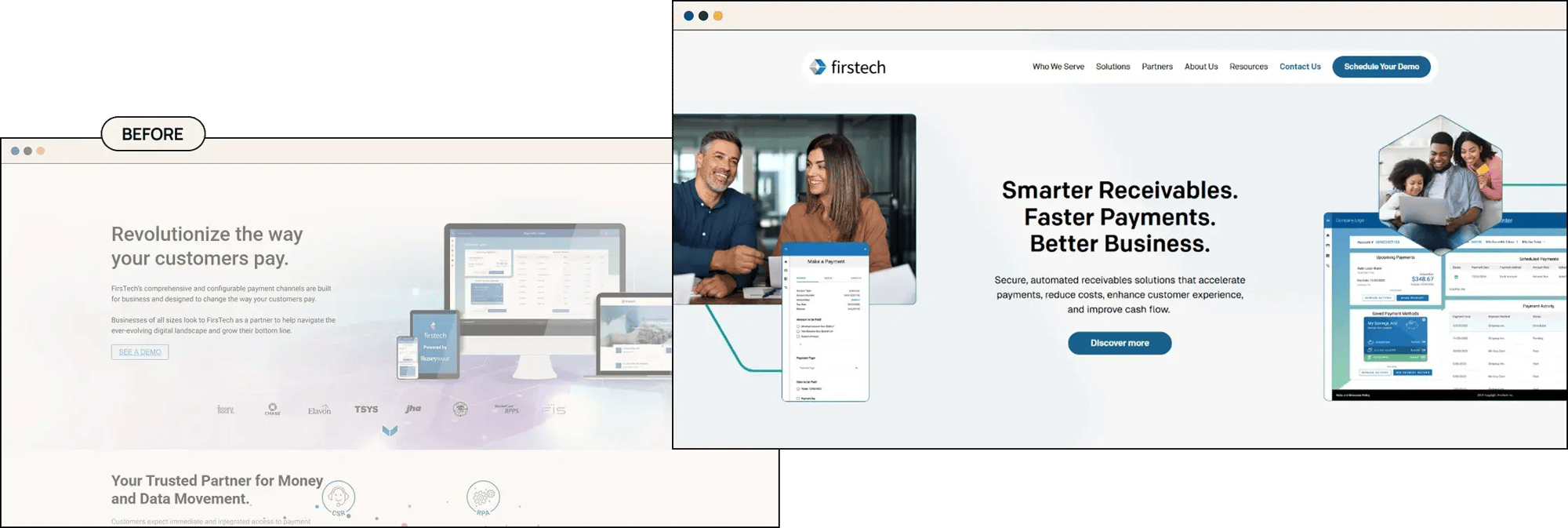
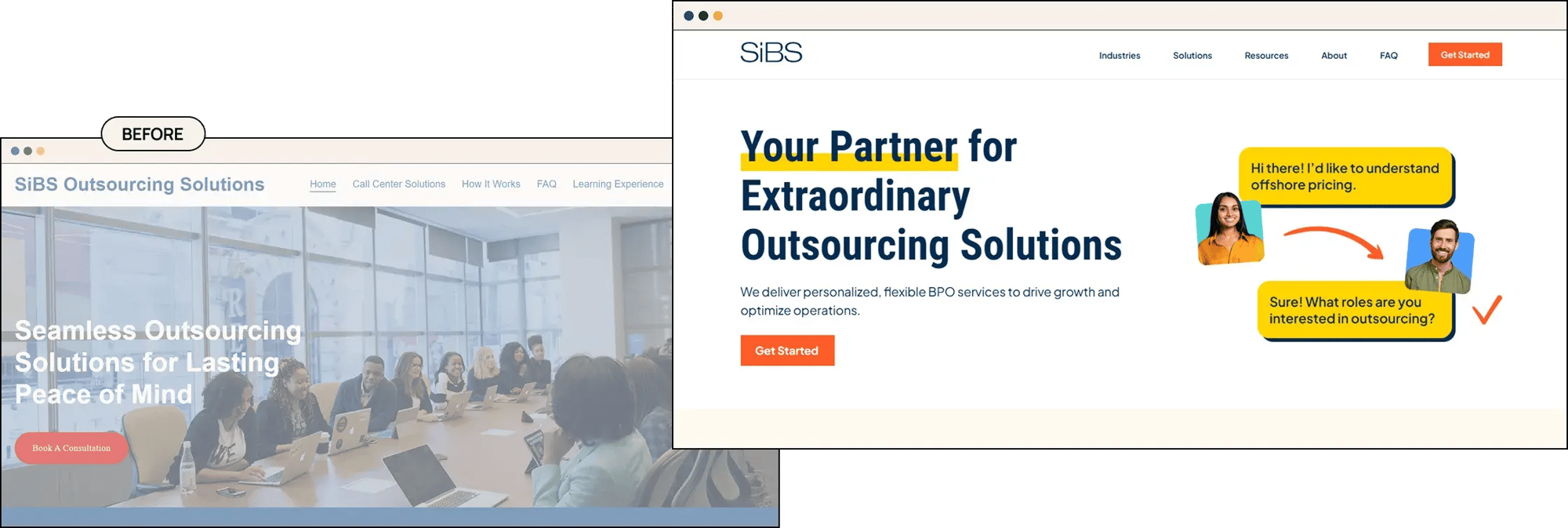
We've built on HubSpot's Content Hub for years—for companies like Aligned Technology Group (full brand refresh and website rebuild), FirsTech (custom object implementation for contact management), and VenturEd Solutions (Salesforce-to-HubSpot re-architecture). We've also built plenty of sites on WordPress when that was the right platform call. The strategic question isn't "should we build on HubSpot?" It's "what does this website need to do, and which platform and agency model supports that?"
As Aligned TG's CFO Jessica Zemonek put it after their rebuild:
"Working with Vaulted made the daunting task of a complete website overhaul feel easy. They kept everything organized, helped us stay on track, and truly listened to our feedback — even when it was conflicting — to deliver a website we all love with minimal revisions."
Jessica Zemonek, CFO of Aligned TG
That's what a platform agency engagement feels like. Not a vendor delivering a project—a team owning the outcome.
Get a free HubSpot website audit
If you're evaluating a HubSpot build, migration, or agency switch, we'll review your current site's CRM integration, Content Hub usage, and technical implementation — and tell you what's working and what's not. No pitch deck. Just an honest read on where you stand.
Frequently Asked Questions
What does a HubSpot Solutions Partner actually mean?
It means the agency has met HubSpot's certification requirements and managed a threshold of HubSpot-related revenue. Partner tiers (Gold, Platinum, Diamond, Elite) scale with revenue — not with design quality, development depth, or client outcomes. A Solutions Partner designation confirms the agency has meaningful HubSpot experience. It doesn't confirm they can build a custom website, integrate your CRM properly, or produce design work that doesn't look templated. Treat partner status as a baseline qualifier, not a differentiator.
Do I need Content Hub Starter, Professional, or Enterprise?
Most B2B companies doing meaningful HubSpot development need Content Hub Professional at minimum. Starter gives you basic page building but limits custom modules, smart content, and dynamic pages. Professional unlocks the features that actually differentiate HubSpot from a flat CMS: smart content, HubDB, custom modules, and A/B testing. Enterprise adds advanced permissions, activity logging, and custom objects at the CMS level — worth it for larger organizations with complex content governance needs. Your agency should recommend the tier based on your specific requirements, not default to the most expensive option.
What should I ask a HubSpot agency before signing?
Skip the generic "tell me about your process" questions. Instead: Show me a build where you implemented custom objects. Walk me through how lead routing works on a site you built. What does your post-launch engagement look like at month six? Can I talk to a client's marketing ops lead, not just their CMO? Ask about CRM integration specifics — lifecycle stage logic, behavioral triggers, smart content implementation. If the agency can't answer these with specifics from past builds, their HubSpot web design capability is thinner than their proposal suggests.
When is HubSpot the wrong platform choice for a website?
When the site doesn't need CRM integration, and you're not using HubSpot for marketing or sales. If you need a content-heavy media site, an e-commerce storefront, or a simple brochure presence with no lead generation logic, platforms like WordPress, Webflow, or Shopify will give you more flexibility at lower cost. HubSpot's Content Hub earns its price when the website is tightly connected to the CRM — when page behavior informs lead scoring, when smart content personalizes the experience, when form submissions trigger multi-step workflows. Without that integration layer, you're paying for capabilities you'll never use. A good agency — including us — will tell you that before you sign a contract, not after.
What should I consider when choosing a HubSpot web development agency?
Focus on three things: platform depth, revenue thinking, and post-launch capability. Platform depth means the agency builds custom modules, integrates CRM data at the page level, and works with serverless functions and custom objects — not just drag-and-drop templates. Revenue thinking means they lead with questions about your sales process, lifecycle stages, and lead routing before they show you mockups. Post-launch capability means they have a defined engagement model for ongoing development, CRM refinement, and conversion optimization after the site goes live — not just a 30-day QA window. Partner tier and certifications are worth noting but shouldn't be your primary filter. Evaluate the work, not the badge.
Build it with Vaulted.
Search by Tags
Be the First to
Know Subscribe to Our Newsletter!
Discover More Insights
How to Choose a HubSpot Implementation Partner That Actually Fits Your Project
Quick answer: The right HubSpot implementation partner isn't the one with the highest tier or the lowest price—it's the one whose Hub specialization, implementation model, and proven revenue outcomes match your specific situation. Evaluate partners on which Hubs they actually deliver (not resell), whether their engagement model fits your internal team's capability, and whether their case studies show pipeline and revenue impact—not just "we deployed Marketing Hub." If your team has a strong HubSpot admin and a simple setup, you might not need a partner at all.
Raleigh Internet Marketing in 2026: The 3 Things That Actually Work
Quick answer: Most Raleigh businesses searching for "internet marketing" need three things before anything else: an optimized Google Business Profile, Local Service Ads (if you're eligible), and email to your existing customers. These three channels deliver roughly 80% of the value for local businesses. Get them working before you sign a retainer with anyone.
HubSpot CMS vs WordPress: The Honest B2B Comparison
Quick answer: For B2B companies where the website needs to function as a lead engine connected to a CRM — not just a brochure — HubSpot Content Hub (formerly CMS Hub) is the strongest choice. WordPress is genuinely better for content-heavy publishing where CRM integration isn't central, or for teams with deep existing WordPress expertise. Most objections to HubSpot — that it looks templated, costs too much, or can't support modern development — are based on outdated information or experiences with agencies that didn't know the platform.
Matthew Deal