

HubSpot plays a pivotal role for countless businesses, streamlining email interactions from marketing blasts to sales engagements and automated email follow-ups. It's the engine behind the scenes, fueling connections with leads and customers alike through its integrated CRM and email toolkit. This tech stack not only drives impressive returns—$42 for every $1 invested in email marketing—but also cements HubSpot as a cornerstone for growth and customer engagement across the board.
But, the email landscape is about to evolve. In February 2024, Google and Yahoo will implement critical updates to their email handling protocols. These changes, emphasizing enhanced authentication and user choice, signal a new era for email marketing. For those leveraging HubSpot, this evolution demands a proactive approach to ensure your email is compliant and continues remains both effective.
Why are email standards changing?
The push to update email standards is largely driven by the battle against spam, which has only intensified with advancements in generative AI. Currently, a staggering 49% of the 333 billion emails sent daily are considered spam. This deluge of unwanted messages clutters inboxes and poses significant security risks. Moreover, the introduction of AI technologies has made it increasingly difficult to distinguish between legitimate emails and those crafted to deceive, making the need for stringent controls more critical than ever.
But it's also a security issue. In 2023, 32% of threat actors turned to email to disrupt organizations, making it clear that the fight against spam is more than just managing annoyances—it's about safeguarding our digital doorstep. Email authentication steps in as a critical defense mechanism. It's essentially checking the ID of every message that shows up, making sure it's coming from a trusted sender. By beefing up these protocols, we're not just cutting down on spam; we're taking a stand against phishing and other malicious attacks, aiming to make the online world a bit safer for everyone.
Email Authentication and HubSpot
With Google and Yahoo's upcoming changes, email authentication becomes non-negotiable; failing to comply could mean your emails end up in the spam folder. While many organizations may already have their email authentication set up, the new requirements from Google and Yahoo mean that some might need to update their DNS records to stay compliant. If you're using HubSpot, it's crucial to ensure that you have three key types of email authentication in place:
- DMARC (Domain-based Message Authentication, Reporting & Conformance)
- SPF (Send Policy Framework)
- DKIM (DomainKeys Identified Mail)
Doing so not only adheres to these new standards but also fortifies your email security, keeping your communications trustworthy and your inbox safe from threats.
HubSpot users and administrators should dive into their domain settings (Settings >> Website >> Domains and URLs) within HubSpot, and specifically look what the Email Sending Domain looks like. If your email authentication is set up correctly, it should look something like the screenshot below:
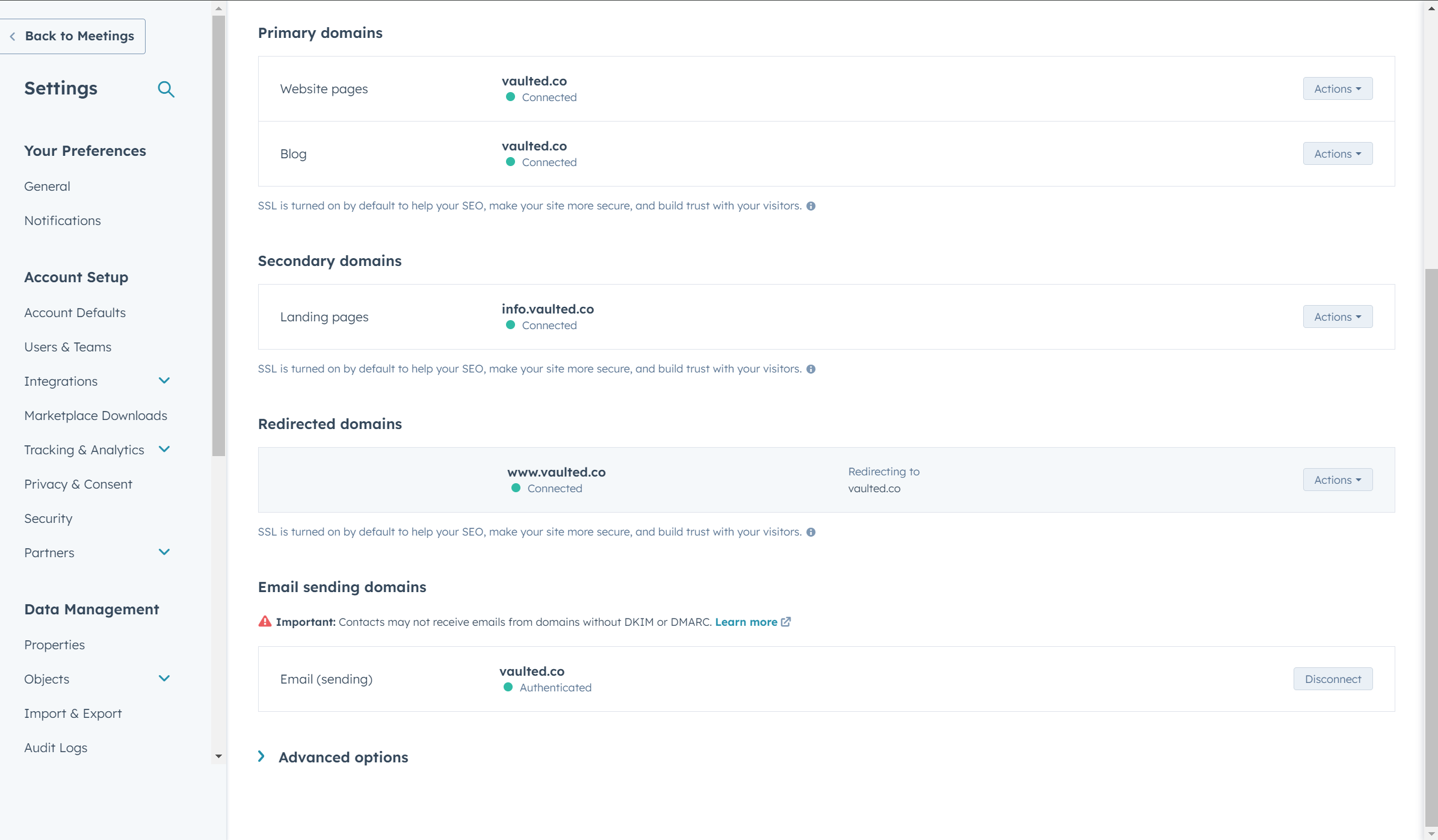
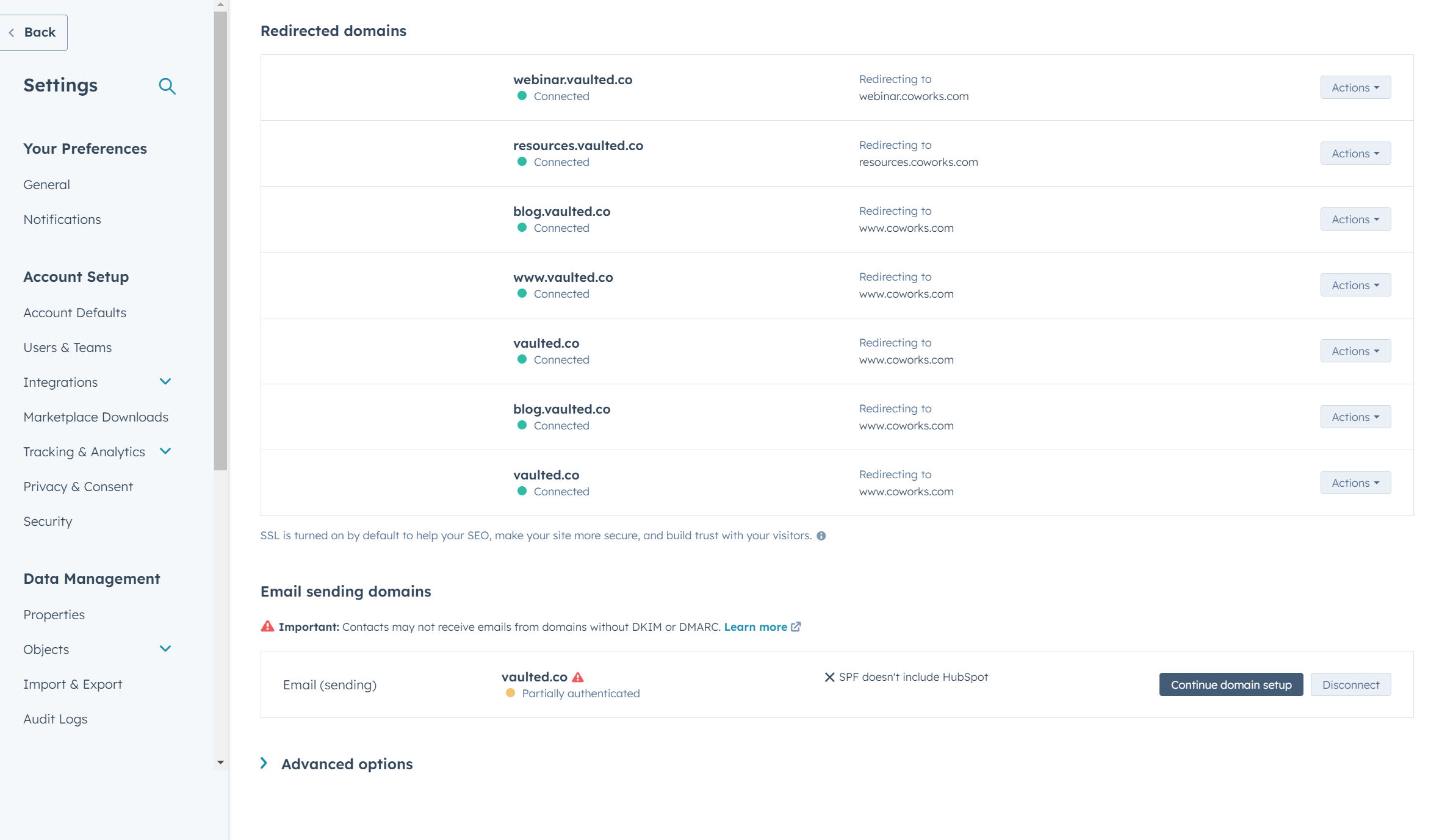
However, if you see Not Authenticated or Partially Authenticated–you need to check your DNS configuration.
Unsubscribe Links on 1:1 Emails, Sequences
One of the other important policy changes for Google and Yahoo now requires a one-click unsubscribe. This means that even your sales emails and sequences should, in theory, also have unsubscribe links to be compliant.
As of this writing, there is little in the way of direction from HubSpot on this situation, but Amara Ellis, Senior Deliverability Operations Consultant at HubSpot, in a forum post does recommend adding unsubscribe links to emails you send from a connected inbox.
“Sends from connected email accounts do not automatically include unsubscribe links. To ensure you meet the upcoming requirements, follow this guide to add unsubscribe links to your 1:1 emails.“
This would also include HubSpot’s sequences. Effectively, any email sent from HubSpot should now have an unsubscribe link.
Keeping Your Spam Rate in Check
One critical component of the upcoming email policy changes by Google and Yahoo is the emphasis on maintaining a low spam rate. From February 2024, senders who dispatch more than 5,000 messages a day to Gmail users will be under scrutiny to keep their spam rates below 0.10%, with a strict upper limit of not exceeding 0.30%. This requirement aims to ensure that only relevant, solicited emails reach users' inboxes, significantly reducing the clutter of unwanted messages.

For HubSpot users, this underscores the importance of curating your email lists and content carefully. HubSpot provides tools to monitor engagement and manage lists effectively, helping ensure your emails are anticipated and welcomed by recipients. It’s vital to leverage these tools to avoid crossing the spam rate threshold, which could lead to emails being blocked or filtered into spam folders. Regularly cleaning your email list, segmenting audiences based on interests and interactions, and personalizing content can help maintain a healthy engagement level and keep spam rates in check.
Should I Be Worried About Email?
In short, no.
There's no need for alarm regarding the upcoming email changes. For many organizations, especially those utilizing platforms like HubSpot, these updates underscore practices already in place. The shift towards stricter email authentication and a focus on maintaining a low spam rate simply formalizes what has long been considered best practice in email marketing and sales communication.
These standards aim to enhance the integrity and deliverability of email by ensuring that messages are wanted, secure, and trustworthy. For businesses that prioritize meaningful engagement with their audience, these changes offer an opportunity to review and refine their email practices, ensuring they're aligned with the best standards for effectiveness and compliance.
How Vaulted Can Help
From deliverability to strategy, the deep-stack experts at Vaulted excel in maximizing email’s impact on sales and marketing outcomes. If you’re unsure of where you are with new email changes reach out and a conversation.
Discover More Insights
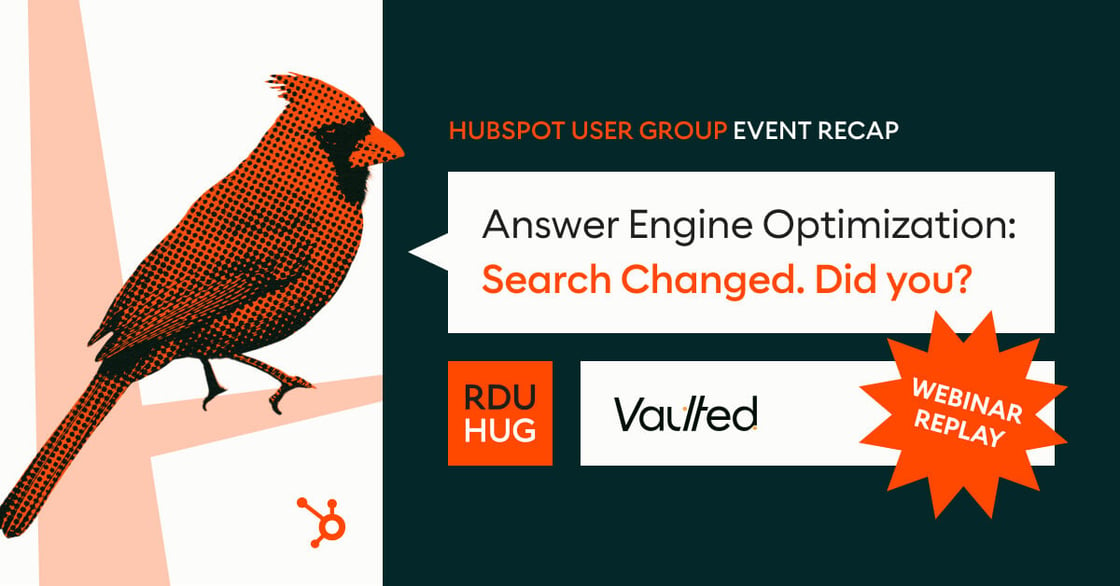
Watch: Our AEO Session from the Raleigh-Durham HUG
This is the replay of our first Raleigh–Durham HubSpot User Group session, Answer Engine Optimization: Search changed. Did you? The core reframe: AEO isn't about earning the click anymore — it's about earning the citation. AI engines increasingly answer your buyer's question outright, without ever sending a click your way, so the job becomes being the passage they quote and credit, not just the page they rank. And the biggest lever isn't even on your own site — branded mentions and earned media correlate with AI visibility roughly 3x stronger than backlinks.

Answer Engine Optimization, Tested: What 471 NC B2B Sites Reveal About Getting Cited
the We relaunched the Raleigh-Durham HubSpot User Group with a live session on AI search—and to back it up, we audited the websites of 471 North Carolina B2B companies and ran 22 real buyer questions through an AI answer engine. The result: 96% of those sites are perfectly readable by AI crawlers—access was never the problem—yet on the questions their own buyers would ask, the companies were cited almost never. The answers went to Reddit, G2, Clutch, and the trade press instead. Answer engine optimization (AEO) isn't about unblocking crawlers or adding schema. It's about becoming the citable authority for a narrow category, and earning mentions in the places engines actually pull from. The full session is below, and the data is in this post.

Does HubSpot Marketing Hub Support Multi-Channel Marketing Campaigns?
What “multi-channel” means in HubSpot A multi-channel campaign in HubSpot isn’t five disconnected tools wearing a trench coat. The Campaigns tool ties your assets (marketing emails, social posts, ad campaigns, SMS sends, landing pages, blog posts, CTAs, forms, and workflows) to a single campaign object, so performance rolls up to one report instead of five spreadsheets.